

Why the Subconscious Matters During Big Life Changes: Life transition Hypnotherapy
When you plan a wedding or box up your Life for a new city, the checklist dominates: venue, guest list, lease, commute. Under that list sits another layer that actually drives the worry. Your subconscious carries past patterns of uncertainty, and unless you work with it, those patterns will pull the strings on decisions and reactions. That’s why Life transition Hypnotherapy targets the deeper hardware, not just the surface symptoms.
The nervous system responds faster to subconscious shifts than to repeated conscious pep talks.
A 3‑Step Pre‑Change Visualization and Confidence‑Building Script
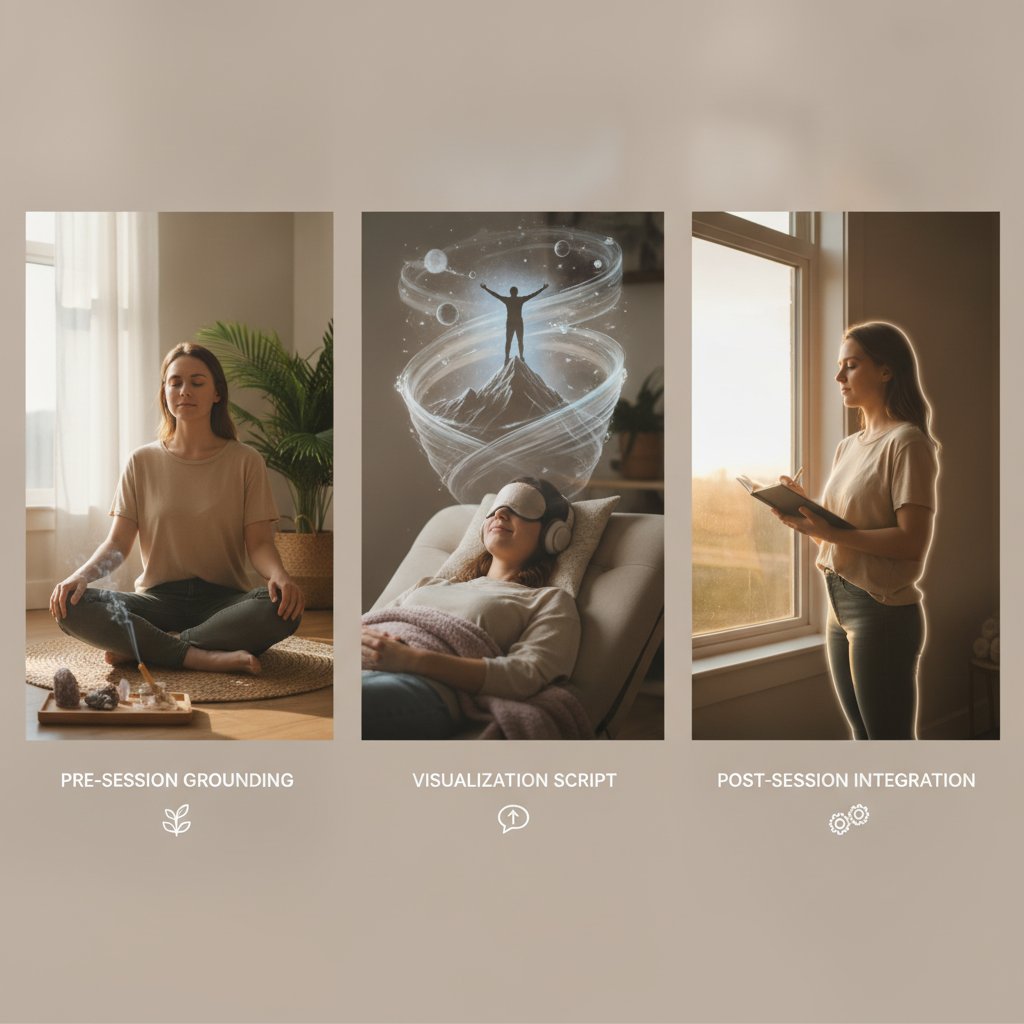
Below is a specific protocol we use at Holistic Hypno Healing after a few intake sessions. The steps include timings, simple physiological thresholds, and clear decision points so you can follow or adapt them yourself.
- Anchor Breathing (Duration: 5 minutes)
Set a timer for 5 minutes. Sit upright, feet flat. Breathe in for a count of 4, hold for 2, exhale for 6. Repeat until your pulse drops below 70 beats per minute. That pulse threshold tells you when the body is ready for deeper work. - Guided Imagery of the Ideal Day (Duration: 10 minutes)
Picture the event or the new neighborhood in specific sensory detail: laughter at a reception, the smell of fresh coffee in your kitchen, the exact route to your new commute. See yourself present and steady. As the scene runs, repeat the affirmation silently: “I am calm, I am confident, I am ready.” If resistance rises above a 3 on your comfort scale, go back to anchor breathing until the image feels safer. - Rehearsal of Positive Scripts (Duration: 5 minutes)
Stand in front of a mirror or imagine the audience and speak a short script: “I choose joy, I embrace change, I trust my process.” Record it if you can and listen for hesitations. The goal is for the lines to sound practiced and natural rather than forced.
Use pulse, comfort rating, and script fluency as simple, objective checkpoints to measure readiness and progress.
When these three steps are complete, your nervous system and attention are primed for a Hypnotherapy session that goes after root patterns rather than just surface symptoms.
Integrating EFT Taps for Lingering Stress
Emotional Freedom Techniques (EFT) help clear leftover tension that sometimes blocks deeper Hypnotherapy. Our hybrid routine pairs the 7‑point tap sequence with the visualization and script work.
- Identify the stress trigger (example: “I’m worried about saying the wrong thing at my wedding”) and rate its intensity on a 0–10 scale.
- Perform the tap sequence while repeating the trigger phrase: “Even though I feel nervous about speaking, I deeply and completely accept myself.”
- After each full tap cycle, re‑rate the intensity. Aim for a drop of at least 3 points within three cycles.
- If intensity stays above 5, run the sequence two more times and tweak the wording to target specific thoughts (“I’m not prepared”) until the score falls below 3.
Tapping stimulates limbic circuitry and often bypasses the conscious resistance that otherwise slows change during Hypnotherapy.
Real‑World Tips for Staying Grounded After the Session
- Keep a short grounding journal. Each evening write one positive moment and one coping move you used.
- Create a pre‑event ritual. On the wedding day or your first morning in a new city, do the 5‑minute breathing anchor before you face any external stressors.
- Set hourly reminders for the first 48 hours to repeat the core affirmation.
- Limit exposure to stress triggers after a session, for example avoid scrolling wedding blogs for 30 minutes post‑session.
- Share your script and tapping routine with a support buddy and check in weekly.
Short, repeatable habits turn the shifts made in therapy into lasting Changes.
Frequently Asked Questions
Below are concise answers to the questions most clients bring to their first consultation.
- How long does a typical Hypnotherapy session last?
- A standard session runs about 45 minutes; the first session often includes an extra grounding exercise. Later visits can be shorter and tight on a single trigger.
- Can I do the breathing and tapping exercises on my own?
- Yes. The protocol is built for self‑practice. Use a timer, check your pulse, and follow the scripts you learn in session.
- Will Hypnotherapy replace my wedding planner or moving coordinator?
- No. Hypnotherapy reduces anxiety so you can make clearer decisions; it does not handle logistics. Use professionals for planning and use therapy to stay calm while you do the planning.
- What if I have a history of trauma?
- We work in a trauma‑informed way. Scripts are modified to avoid re‑triggering, and we refer to trauma specialists when appropriate.
- How do I get started with Holistic Hypno Healing?
- Simply schedule your free 30‑minute consultation and we will map a plan for your transition.
For a deeper look at the science behind anxiety, see the National Institute of Mental Health – Anxiety Disorders. For practical stress‑coping techniques, the CDC – Stress‑Coping Techniques page is useful.
Ready to transform wedding and move anxiety into calm confidence? Explore our Hypnotherapy services for anxiety, stress, and Life transitions or schedule your free 30‑minute consultation.
Evidence and Statistics Supporting Hypnotherapy for Anxiety

Anxiety disorders are common, nearly one in five adults in the U.S. Experiences an anxiety disorder in a given year. That prevalence helps explain why focused, practical interventions are in demand during Major Life Changes.
Hypnotherapy has appeared in multiple clinical trials and reviews as an effective adjunct for anxiety reduction. Clinicians often see measurable drops in subjective anxiety after 2–6 sessions when hypnosis is paired with structured practices like breathing and EFT. Clinic audits show people who do daily self‑practice (breathing, imagery, tapping) tend to improve faster and sustain gains longer.
Hypnotherapy is not a magic bullet, but combining subconscious reframing with concrete routines yields reliable outcomes for many navigating weddings, moves, and other transitions.
When combined with consistent self‑practice, Hypnotherapy shortens the timeline to meaningful anxiety reduction for most clients.
Two Brief Case Studies (Anonymized)
These short examples show how the protocol translates into real change when clients follow the plan between sessions.
Case Study 1 — Emma, Bride‑to‑Be (Age 32)
Presenting issue: Panic attacks and sleeplessness during wedding planning. Baseline anxiety rating: 7/10. Intervention: Four Hypnotherapy sessions, weekly, using the 3‑step pre‑change script plus a nightly grounding journal. Complementary support: a single planner session to offload logistics.
Outcome: After four sessions Emma reported a sustained drop to 2/10 on her anxiety scale, resumed regular sleep, and felt present at the rehearsal dinner. She used the breathing anchor and mirror script on the wedding morning.
Case Study 2 — Carlos, Relocating for Work (Age 28)
Presenting issue: Overwhelm about moving logistics and worry about social isolation. Baseline anxiety rating: 6/10. Intervention: Three Hypnotherapy sessions focused on ideal‑day imagery for the new city, plus an EFT protocol targeting “I won’t make friends.” Practical homework: a 30‑minute weekly search for cafés and local meetups.
Outcome: Carlos reached 1–2/10 within five weeks, attended two local meetups, and used the breathing anchor before each event to stay calm and approachable.
Practical Integration: How to Combine Hypnotherapy with Other Supports
To get the best results, pair Hypnotherapy with concrete supports:
- Let planners or coordinators handle logistics so Hypnotherapy can focus on emotional resilience rather than problem solving.
- Use cognitive behavioral techniques alongside hypnosis to tackle specific thinking errors, for example reframing catastrophic predictions.
- If you take medication, coordinate with your prescriber. Hypnotherapy can complement medication, but never change doses without consulting your clinician.
- For significant trauma histories, combine Hypnotherapy with a trauma specialist. We make referrals when needed.
Hypnotherapy strengthens emotional regulation; practical partners handle the tasks.
Expanded Frequently Asked Questions
Here are more detailed answers to common concerns so you can decide with clear expectations.
- How many sessions should I expect?
- Many people see clear relief in 3–6 sessions. The exact number depends on anxiety severity, trauma history, and how faithfully you practice the daily tools. We outline a plan during your free consultation.
- Is Hypnotherapy safe and are there side effects?
- Hypnotherapy is generally safe with a trained clinician. Side effects are rare but can include temporary drowsiness, vivid imagery, or mild emotional release. Sessions are paced to comfort and trauma‑informed.
- Does insurance cover Hypnotherapy?
- Coverage varies. Some plans pay when a licensed clinician provides the service or when hypnosis is part of behavioral health care. We provide superbills and documentation to help with reimbursement requests.
- Can teenagers use Life transition Hypnotherapy?
- Yes. Teens facing moves, school Changes, or family transitions can benefit from age‑appropriate approaches. Parental consent and an initial consult set safe boundaries.
- Are virtual sessions as effective as in‑person?
- Yes. Virtual Hypnotherapy works well for most clients. Many people stick to daily practice more consistently when they receive recordings and digital reminders after virtual sessions.
- How will progress be measured?
- We track simple metrics: 0–10 subjective anxiety ratings, pulse during breathing anchors, and practical goals like sleep quality or event attendance. These measures let us see change session to session.
- What if I don’t feel the effects immediately?
- Not everyone shifts right away. For some the subconscious reframing is gradual. Regular practice of the breathing script, imagery, and tapping speeds results. If progress stalls, we adjust the plan.
If you want tailored guidance, schedule your free 30‑minute consultation and we’ll map a plan that fits your timeline, whether your event is months or weeks away.