

Quick Answer: Test Anxiety Hypnotherapy uses guided relaxation and focused attention to lower physiological arousal and reframe negative thoughts before exams. For College Students, this approach reduces the physical symptoms of stress, such as racing heart and shallow breathing, while boosting confidence in their preparation. When paired with consistent study habits and professional guidance, it builds lasting mental resilience.
Why Standard Study Tips Often Fail College Students
Most Students struggle on exam day not because they didn’t study, but because their nervous system has been hijacked by fear. When you sit in that lecture hall or face a final, your body can interpret the situation as a threat and flood your brain with cortisol. That hormone makes memory retrieval and clear thinking harder.
The American Psychological Association – Anxiety reports Anxiety disorders are among the most common mental health conditions in the U.S., and academic pressure is a major trigger for College-aged people. Some nervousness is normal; the problem is when it becomes debilitating — panic attacks, blanking out, or avoidance of studying.
Advice like “just relax” or “study more” misses the physiological side of the problem. You can’t reason your way out of an adrenaline spike. You need methods that calm the body first, then rework the thinking. You can’t logic your way through a panic attack — you need tools aimed at the body and the automatic responses that drive it.
How Test Anxiety Hypnotherapy Works in Practice
Hypnotherapy uses a state of focused attention and heightened suggestibility to bypass the analytical mind. You’re not asleep or out of control. You stay aware, while the critical inner voice relaxes enough for new suggestions to take hold.
The aim is simple: train new automatic responses. Instead of panicking when the Test starts, you access calm, focused clarity. This is a skill that improves with practice and targeted sessions. The goal is to install new automatic responses so calm becomes the default, not panic.
- Physiological Regulation: Hypnosis helps lower heart rate and normalize breathing patterns. When your body is calmer, your brain can retrieve information more efficiently.
- Cognitive Reframing: We swap catastrophic thoughts (“I will fail”) for realistic, actionable beliefs (“I prepared; I’ll do my best”).
- Visualization Training: Students rehearse the exam environment mentally so the real setting feels familiar, not shocking.
Unlike medication, which manages symptoms chemically, Hypnotherapy trains the mind to manage itself over time. That makes the change sustainable and usable beyond College.
The Specific Mechanism: Depth and Suggestibility
In a professional session, the practitioner guides you into progressive deepening. This isn’t just closing your eyes — it’s a sequence of sensory focuses that anchor relaxation and drop the analytical guard. As you deepen, the mind becomes more open to positive cues.
For example, if exams trigger a visceral dread, we work to unlink that discomfort from the act of writing. We build a new association: writing is a way to let your knowledge out. It takes a few sessions to stabilize this neural change, but when it sticks the difference is clear. As you deepen, your mind becomes more receptive to positive self-talk and confidence cues that then carry over into Test situations.
A 5-Minute Self-Hypnosis Routine for Exam Days
Professional Hypnotherapy for Test Anxiety gives the best long-term results, but you can handle acute spikes with a short self-hypnosis routine. It’s discreet and works in a dorm, the library, or before you walk into the exam hall (if allowed).
- Positioning: Sit with your back supported. Uncross your legs. Rest your hands in your lap. Close your eyes gently — don’t squeeze them shut.
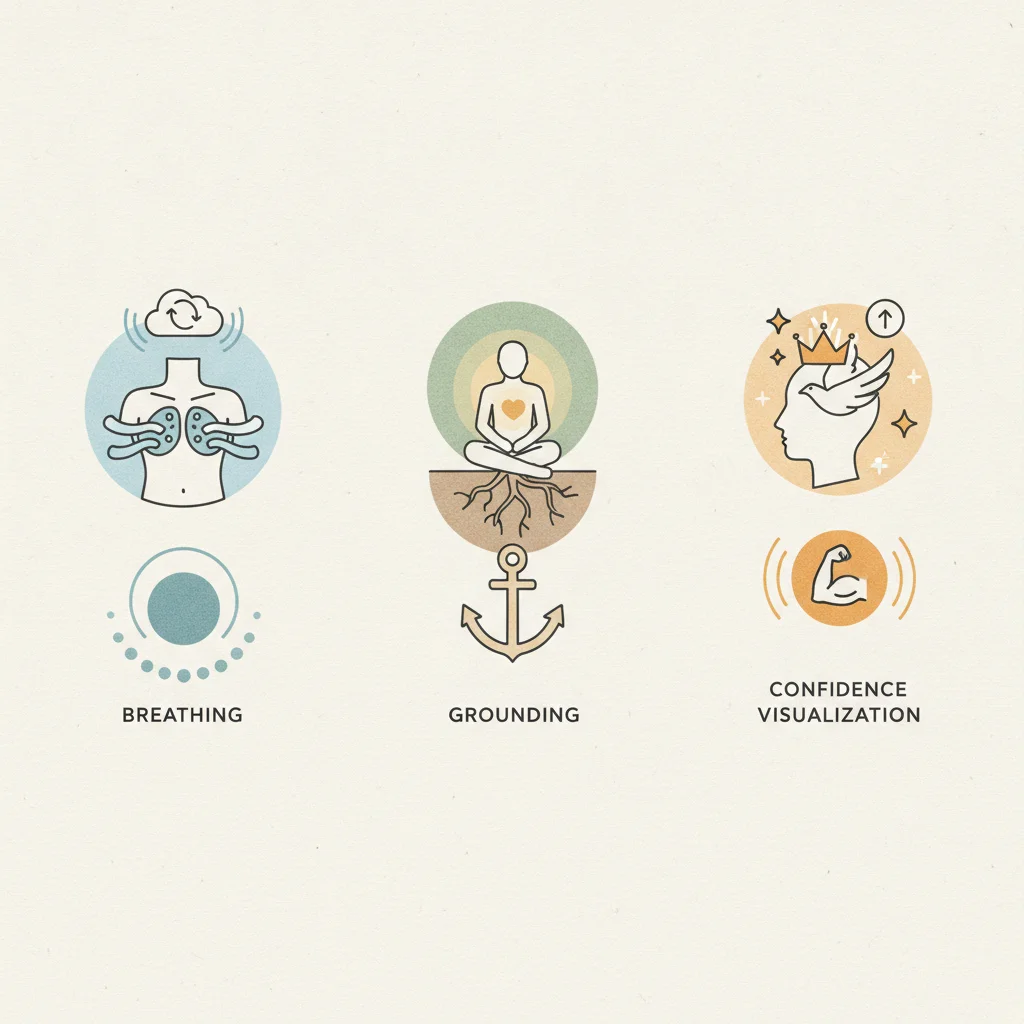
- Respiratory Pacing: Breathe in through your nose for four counts. Hold two. Exhale through your mouth for six. Repeat three times. Notice tension — usually shoulders or jaw — and release it on the exhale.
- Mental Anchor: Pick a specific word or image that equals calm focus — a color, a small object, a sensation. With each breath, attach that anchor to the release of tension. When your heart rate climbs during the exam, bring the anchor to mind to pull yourself back.
- Positive Affirmation: Silently say, “I am calm, focused, and ready to show what I know.” Feel the phrase in your chest, not just your head.
- Re-Engagement: Wiggle your toes, stretch your fingers, take one final deep breath, and open your eyes. You’re back in control and ready for the task.
This five-minute sequence is a powerful reset for acute Anxiety; it stops the spiral before cognitive resources get shelled by fear.
Structuring Your Pre-Exam Hypnosis Plan
Timing matters. The night before an exam is too late to build new neural patterns; three weeks out is usually too early to Test the tactics. What works is a structured plan that ramps toward the Test date.
| Timeframe | Focus Area | Action Item |
|---|---|---|
| 3 Weeks Prior | Baseline Assessment | Identify specific triggers (e.g., open-book vs. closed-book, group vs. solo). |
| 2 Weeks Prior | Confidence Building | Practice visualization of successful recall. Focus on past successes. |
| 1 Week Prior | Relaxation Deepening | Shorten study sessions. Use self-hypnosis to manage break time stress. |
| Exam Day | Acute Regulation | Use the 5-minute routine immediately before writing. |
A plan like this prevents cramming Hypnotherapy into an already overwhelmed schedule and makes the practice part of your study workflow.
How to Choose a Qualified Hypnotherapist for Students

Not all hypnotherapists offer the same training or experience. When you look for College student stress hypnosis, check credentials and ask about work with academic clients specifically.
Look for certification from recognized organizations and ask whether they’ve worked with Students facing timed tests, oral exams, or high-stakes finals. A clinician who treats general issues like weight loss May not understand the particular triggers of Test Anxiety.
During an initial consult, ask these practical questions:
- Do you have experience working with College Students or Test Anxiety specifically?
- What is your typical number of sessions for Anxiety relief?
- Do you provide audio recordings for self-practice between sessions?
At HolisticHypno Healing, we know student Anxiety often ties into identity and concerns about the future as well as fear of failure. We tailor our work to ease immediate symptoms and to reshape the underlying beliefs that keep Students stuck. Book Your Free 30-Minute Consultation to see if we’re a fit.
Common Mistakes Students Make with Hypnotherapy
Expecting immediate, magical results from a single session is the most frequent mistake. Hypnotherapy rewires patterns, and that takes repetition. If you try one session and quit when you don’t feel different, you lose the chance to build lasting change. Give the process time and practice; that’s how the shifts become permanent.
Another error is treating hypnosis as a substitute for studying. Hypnotherapy clears mental fog and improves study efficiency, but it doesn’t create knowledge out of nothing. The two have to work together.
Finally, don’t ignore physical health. If you’re sleep-deprived, underfed, or jittery from too much caffeine, hypnosis won’t hold. Aim for seven to eight hours of sleep and stay hydrated so your body isn’t stuck in survival mode.
Frequently Asked Questions
Does Test Anxiety Hypnotherapy work for all Students?
It’s highly effective for most Students with Anxiety-related performance problems, but it’s not a universal cure. If your Anxiety is severe or includes panic attacks, see a licensed mental health professional first. Hypnotherapy often complements traditional therapy.
How many sessions do I need to see results?
Many Students notice reduced physical symptoms after one to two sessions. For durable change and stronger confidence, four to six sessions is a common course, combined with self-practice between appointments.
Can I do self-hypnosis without professional training?
Yes. Basic techniques like the five-minute routine above are safe for most people to use on their own. Working with a pro helps you pinpoint triggers and create personalized suggestions, plus they can give you recordings to practice with.
Is Hypnotherapy safe?
Yes. Hypnotherapy is generally safe for healthy people. You stay in control and can end the state anytime. If you have a history of epilepsy or psychosis, tell your practitioner before beginning treatment.