

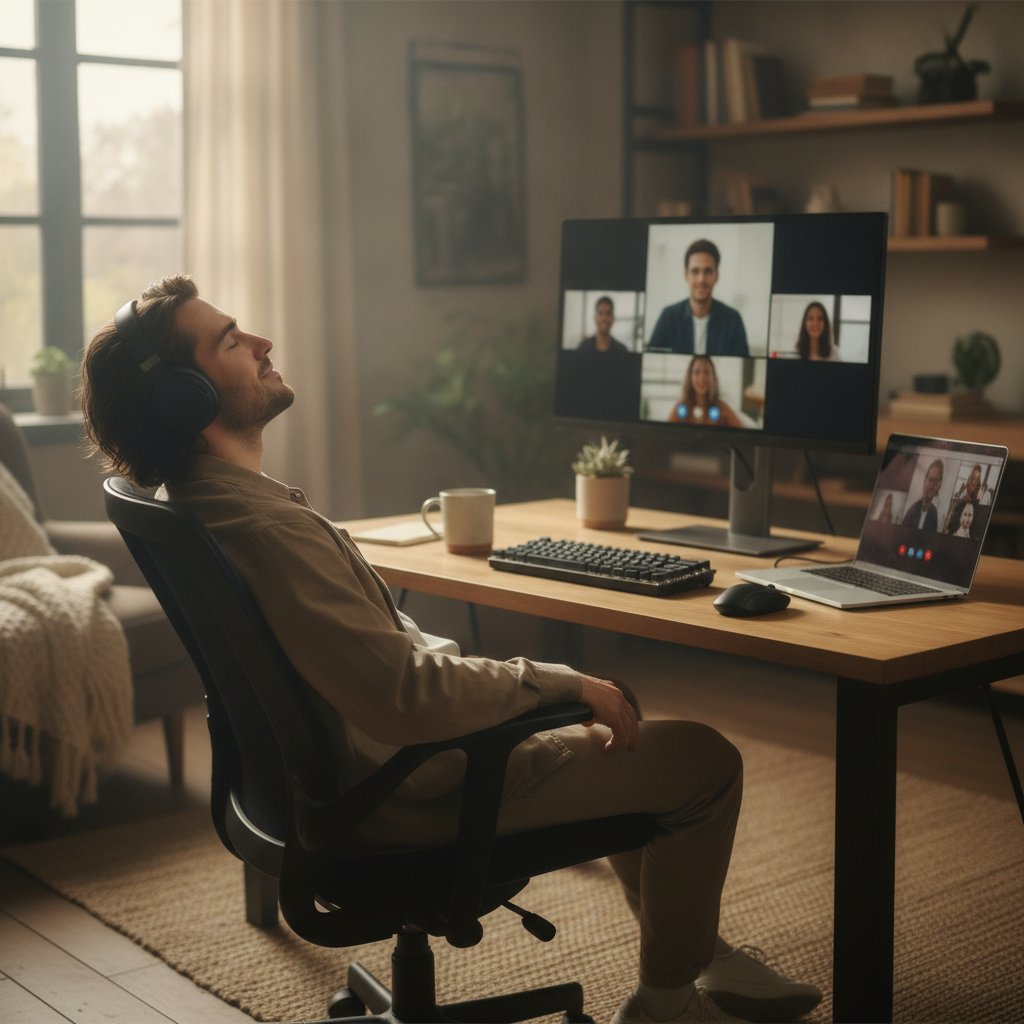
Access to Virtual Hypnotherapy Silicon Valley gives Remote tech professionals a clinical, non-invasive way to dismantle chronic Stress and anxiety at the source. It doesn’t patch over tension with a breathing exercise; it targets the subconscious drivers of burnout so engineers and managers can actually downshift their nervous systems from their home desks. This method fits into a fragmented Remote day and delivers measurable change in baseline reactivity.
The Real Cost of Remote Anxiety in Tech Hubs — Virtual Hypnotherapy Silicon Valley
Remote work moved the office into the living room, but it didn’t make Stress disappear. For the developer in Palo Alto or the product manager in Mountain View, the home office turned into a pressure cooker. Work and rest blurred. You log off at nine, yet your brain keeps compiling, anticipating the next stand-up, replaying that awkward Slack message.
A Harvard Business Review article on the psychology of Remote work shows how lack of physical separation creates a low-grade state of alertness. Your body treats the home office as a place of labor, so it never fully downshifts. That produces cognitive fatigue that a weekend rarely fixes. You’re not just tired; you’re wired.
Silicon Valley Remote Workers face specific pressure points:
- Constant Connectivity: Being reachable 24/7 keeps the sympathetic nervous system primed. “Offline” is often only an aspiration.
- Zoom Fatigue: Long meetings with sustained attention and screen processing exhaust mental bandwidth. By the third hour, you’re running on fumes.
- Isolation: Without casual office interactions, micro-recovery moments vanish and Stress accumulates.
Traditional Stress Relief often fails because it treats the symptom (tension) rather than the root cause (subconscious anxiety loops).
How Online Hypnotherapy Targets Subconscious Stress

Hypnotherapy isn’t mystical and it isn’t mind control. It’s a state of focused attention where the brain’s critical, argumentative layer quiets down. That silence opens a channel to the subconscious, where Stress patterns get stored and replayed.
Remote work usually trains a threat-response: your subconscious tags “work emails” or “video calls” as dangers and triggers cortisol before the event. Hypnotherapy rewrites that tag. It teaches your nervous system that professional pressure is tolerable, not catastrophic. That’s why Virtual Hypnotherapy services matter — you don’t have to drive across town to change neural pathways. A guided session from your desk can do it.
The key difference between relaxation and therapy is permanence. Deep breathing drops heart rate for a few minutes. Hypnotherapy shifts the baseline belief that you must be at peak performance every second. Once that belief changes, physical tension often drops long-term. It’s structural repair, not a bandage.
Step-by-Step: Integrating Hypnotherapy into Your Remote Day
You don’t need to stop working to benefit. Actually, scheduling sessions at unconventional times often works better. Below is a practical protocol that fits a high-load tech schedule.
Step 1: Schedule the “Deep Work” Break
Block 60–90 minutes and treat it like a client meeting. Put a clear “Do Not Disturb” on your calendar. Early morning, before the inbox floods, or right after lunch to break the slump are the best windows. Avoid the end of the day — your brain will be too fatigued for deep suggestions.
Step 2: Prepare the Workspace
Your environment cues your nervous system. You don’t need a spa; you need a visual signal that this time is different. Try these simple adjustments:
- Lighting: Dim overheads and use warm, low-level light where possible.
- Audio: Put on noise-canceling headphones. Block the dog, the HVAC, the drill next door.
- Posture: Sit back, uncross your legs, drop your shoulders. Relaxed posture signals safety to the subconscious.
Step 3: The Session Execution
Connect, listen, and follow the hypnotist’s voice. Don’t force relaxation — that fights the process. When your mind wanders to a stubborn bug, notice it and return to the voice. The aim is to reduce prefrontal activation and let the parasympathetic nervous system engage. It’s a skill: the first session May feel like staring at a wall; by the third you’ll likely feel much lighter.
Step 4: Post-Hypnosis Integration
After the session, spend five minutes reorienting. Don’t jump straight into Slack. Hydrate. Stretch. A gentle re-entry prevents a rebound Stress spike and helps the calm settle in.
Comparing Relief Strategies: Hypnotherapy vs. Standard Methods
Most Remote Workers rely on willpower or quick fixes, which are reactive and short-lived. Hypnotherapy is proactive and aimed at changing the underlying wiring.
| Method | Time to Effect | Durability | Best For |
|---|---|---|---|
| Box Breathing | Immediate (Minutes) | Low (Stops when you stop) | Acute panic spikes |
| Medication | Hours to Days | Variable (Depends on dose) | Clinical anxiety disorders |
| Virtual Hypnotherapy | 1-3 Sessions | High (Rewires patterns) | Chronic workplace Stress |
Hypnotherapy delivers the highest durability-per-minute because it changes the neural pathway, not just the immediate Stress response.
Medication manages symptoms. Breathing gives immediate Relief but needs repetition under pressure. Hypnotherapy installs an automatic, healthier response so your system begins to self-regulate when it detects a work-related trigger.
Is Virtual Hypnotherapy Effective for Tech Professionals?
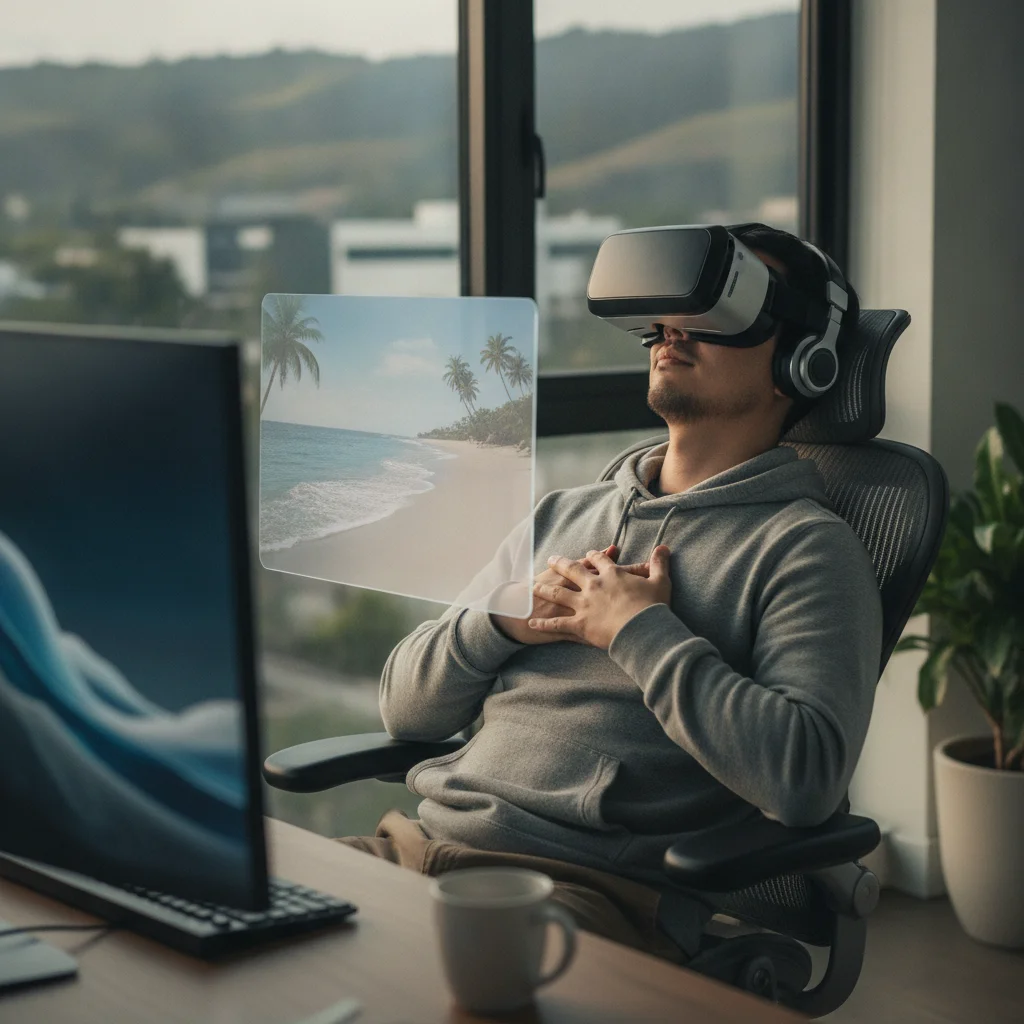
Yes — when approached with realistic expectations. Tech professionals tend to trust processes with repeatable results. Hypnotherapy is structured. It’s not mystical; it’s a guided focus technique that leans on neuroplasticity.
Effectiveness hinges on specificity. A generic “relax” track won’t neutralize fear of code reviews. A tailored session will. The therapist identifies the exact stressor — public speaking, tight deadlines, impostor syndrome — and crafts targeted suggestions. That’s the difference between professional Hypnotherapy for Remote employees and generic consumer audio tracks.
Senior engineers carry heavy cognitive loads all day. Hypnotherapy bypasses an exhausted executive function and speaks to deeper, more stable brain systems. That can produce a reset meditation often struggles to deliver for highly analytical minds. Meditation asks you to watch thoughts; Hypnotherapy guides you past them. For an analytical person, that bypass can feel like Relief, not threat.
How to Prepare Your Mind for the First Session
Hesitation is normal. Relinquishing control feels risky to someone who manages systems for a living. Reduce the friction like this.
- Clarify Your Goal: Write one specific problem. “I feel anxious before Monday stand-ups” beats “I am stressed.” Specific goals let the therapist craft precise suggestions.
- Set Expectations: You won’t drop into unconsciousness. If you do, it’s okay — but you’ll stay aware and in control. You can stop the session anytime.
- Commit to the Aftermath: The utility shows up in the days that follow. Note how you react to the next difficult email. Does cortisol spike or does curiosity show up instead? Track that change for two weeks.
Don’t judge the first session by whether you feel instantly “zen.” Judge it by how you handle Stress the next day. If a crisis shakes you less, the session worked.
Common Mistakes in Remote Stress Management
Many professionals try to solve Stress by doing more work. Clearing the backlog rarely fixes the problem — the backlog is infinite. The pressure is internal.
Mistake #1: Treating Stress as a time-management problem. It’s energy management. Hypnotherapy helps you recover energy faster.
Mistake #2: Ignoring physical cues. Tight jaw, raised shoulders, cool hands — those are data. Your body is in fight-or-flight. Acknowledge it. Hypnotherapy reinterprets those signals as non-threatening.
Mistake #3: Being inconsistent. One session offers a glimpse; regular sessions build the new pathway. Think of it as refactoring code: you don’t rewrite the system in one commit. Weekly or bi-weekly sessions are a common maintenance protocol.
Frequently Asked Questions
Does Virtual Hypnotherapy work the same as in-person?
Yes. The mechanism is the guided voice and your focused attention. With a stable internet connection and a quiet space, access to the subconscious is equivalent. Many Remote Workers relax more easily at home.
How many sessions do I need for Remote worker anxiety Relief?
Most people notice a meaningful shift after 2–3 sessions. For deeper patterns, a 4–6 session course helps solidify new neural pathways and improve long-term stability.
Will I be in control during the session?
Absolutely. Hypnotherapy is not sleep or mind control. You remain aware and can pause or stop at any time.
Is this a replacement for therapy?
Hypnotherapy is a complementary Tool, excellent for managing Stress and anxiety. It’s not a substitute for clinical diagnosis or medication management. If you are in crisis, seek immediate professional help.