


Hypnotherapy for Menopause: Calm Cravings and Manage Weight
Quick answer: Hypnotherapy for menopause can reduce sudden food Cravings and Support Healthy Weight by rewiring subconscious triggers, lowering stress-driven hunger, and building mindful habits that stick after sessions. It’s drug-free and complements diet, exercise, or medical care by changing how your brain responds to hormonal and emotional signals.
Why do Cravings spike during menopause?
Falling estrogen and changing progesterone shift how you feel hunger, sleep, and mood, so Cravings become more frequent and intense. The National Institute on Aging has a clear overview of these effects on their menopause page: National Institute on Aging menopause page.
The science of menopause-related Cravings
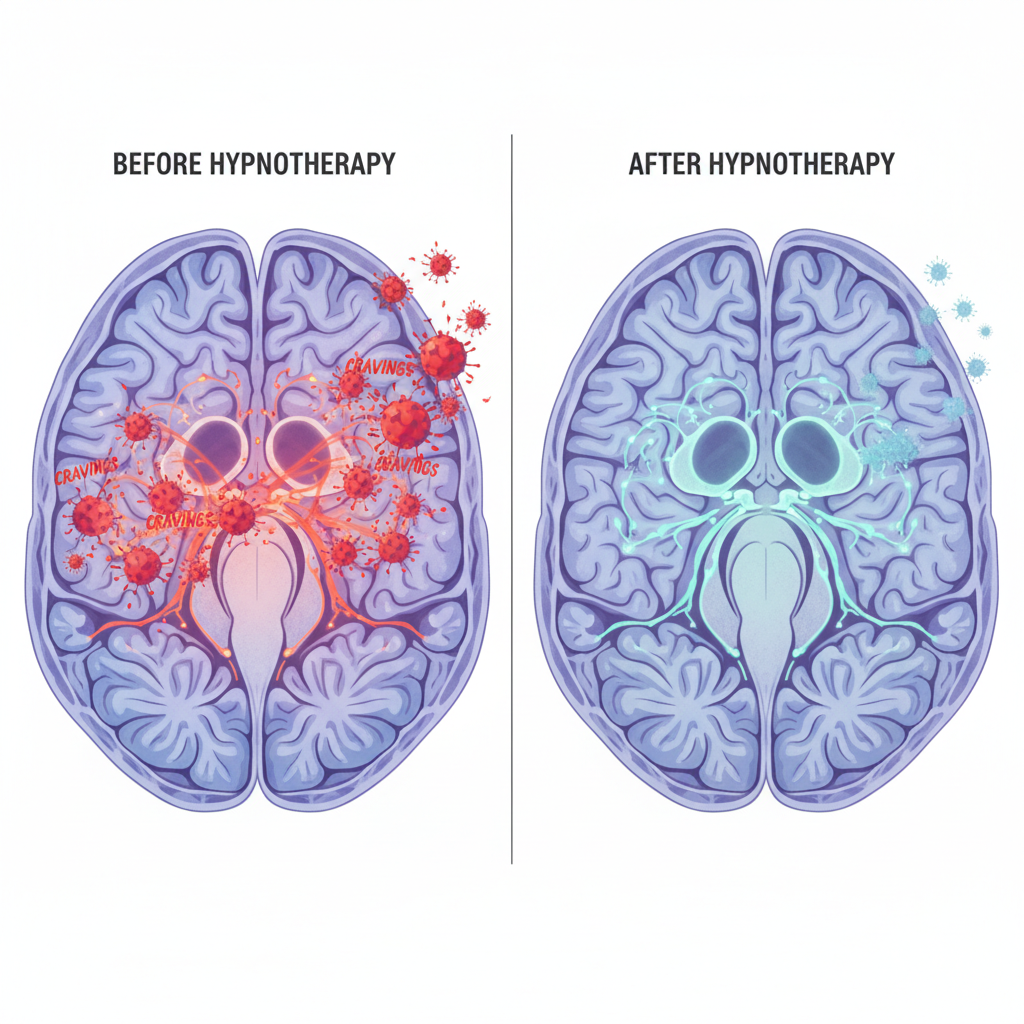
Estrogen helps regulate serotonin and dopamine, which shape fullness and reward. When estrogen drops, satiety signals weaken and reward-driven Cravings for sweets and high-fat foods get louder. Sleep fragmentation adds another layer: poor sleep raises ghrelin and lowers leptin, pushing appetite higher. Stress ramps cortisol, which both increases abdominal fat and sharpens food-seeking behavior. Put those pieces together and you get a persistent cue-reward loop that makes midlife Weight gain common.
Reduced estrogen can blunt fullness signals while amplifying reward-driven eating.
These biological shifts interact with behavior. If you use food to cope with sleepless nights or stress, those patterns become automatic. Hypnotherapy doesn’t change hormones, but it can interrupt the learned responses that translate those hormonal signals into repeated eating episodes.
- Common drivers of Menopausal Cravings: fluctuating estrogen, poor sleep, stress, emotional coping, and changes in metabolism.
- Typical symptom cluster: increased snacking, stronger sweet/salty urges, and Weight gain around the abdomen.
How Hypnotherapy for menopause calms hunger and Cravings
We work directly on the subconscious routines that turn a cue — a bad night’s sleep, an argument, a perfume smell — into an automatic reach for food. Sessions layer relaxation, focused suggestion, and imagery so those automatic eating scripts weaken and healthier defaults take over. This is a behavioral tool that pairs well with medical care when hormones need addressing.
Hypnotherapy changes learned responses to triggers so Cravings no longer hijack decision-making.
In practice we use three mechanisms. First, stress reduction: guided trance lowers sympathetic arousal and the cortisol spikes that drive emotional eating. Second, cue re-association: clients rehearse short alternative actions when triggered, like a breathing routine or a 10-minute walk. Third, strengthening mindful choice: suggestions make it natural to rate hunger on a 0–10 scale and to delay automatic eating for a timed pause.
We ask clients to track Cravings on that 0–10 scale every day. If an episode usually hits 7 or above, we teach a 10-minute protocol: 2 minutes of paced breathing, 3 minutes of progressive relaxation, then 5 minutes of guided imagery that shifts attention away from food. That specific timing gives people a practical, portable tool they can use anywhere.
How quickly will Hypnotherapy reduce my Menopausal Cravings?
Many people notice reduced craving intensity within 3–6 sessions. Habit change firms up by 8–12 sessions. Individual results depend on past patterns, current stress, and how faithfully you practice between sessions.
Real-world steps to integrate Hypnotherapy into a menopause wellness plan

Combine structured sessions with daily practice, objective tracking, and communication with your clinician. Below is a concrete plan you can follow and adapt.
- Initial assessment (60 minutes). Map eating triggers, sleep, medications, and goals. Use a 0–10 craving baseline diary for 7 days.
- Foundational course (six 60-minute weekly sessions). Focus: stress reduction, cue re-association, and personalized suggestions. Decision criteria: if average craving intensity drops by at least 30% after six sessions, move to maintenance; if not, continue two additional sessions and reassess.
- Daily self-hypnosis (10–20 minutes). Use a recorded script emphasizing the breathing + 10-minute delay protocol. Threshold: practice at least five days per week for the first six weeks.
- Behavioral supports. Sleep hygiene, gentle strength training twice weekly, and protein-rich breakfasts stabilize blood sugar. Coordinate changes with your physician.
- Maintenance and relapse plan. Monthly check-ins for three months, then as-needed tune-ups. If Cravings rebound to baseline levels, schedule a 60-minute booster within two weeks.
Practical thresholds—30% craving reduction by session six and daily self-practice five times per week—make progress measurable and actionable.
Where Hypnotherapy fits with other options
| Approach | Primary effect | Pros | Cons |
|---|---|---|---|
| Hypnotherapy | Rewires triggers, reduces stress-driven eating | Drug-free, builds lasting habit change, fits with therapies | Requires time and practice; results vary by engagement |
| CBT (therapy) | Changes thoughts and behaviors around food | Evidence-based, helps mood and patterns | Can feel effortful; needs homework |
| HRT / medical | Addresses hormonal drivers | Can reduce hot flashes and some appetite changes | Medical risks to weigh with provider |
| Diet & exercise | Addresses calories and metabolism | Direct impact on Weight and health | Doesn’t reprogram subconscious triggers alone |
Use Hypnotherapy alongside medical evaluation. If you haven’t had a menopause review recently, consult a clinician and review symptom guidance from the National Institute on Aging menopause page.
What mistakes do people make when trying Hypnotherapy for Menopausal Weight?
People often treat Hypnotherapy like a single-session quick fix. Lasting change needs repeated sessions and daily practice. Skip the self-practice and the suggestions never fully transfer into real-life choices.
Don’t expect a single session to erase years of learned responses; commit to the plan and measure progress.
How we measure success
We track three practical metrics: average daily craving level (0–10), unplanned eating episodes per week, and waist or Weight change over 12 weeks. Our decision rule: if two of three metrics hit target improvement (30% lower Cravings or 50% fewer unplanned episodes), we shift to maintenance.
That measurement keeps both client and practitioner accountable and lets us tweak scripts or increase session frequency when needed.
Frequently Asked Questions
Can Hypnotherapy replace hormone therapy for menopause?
Hypnotherapy does not replace medical hormone therapy. It addresses behavior and stress-driven eating. Combine approaches after discussing options with your clinician.
Is Hypnotherapy safe for everyone?
Most people tolerate Hypnotherapy well. Let us know about serious psychiatric conditions or medication changes so we can adapt the plan safely.
How long before I see Weight change?
Weight change timing varies. Many clients notice smaller Cravings within weeks and measurable Weight trends after 8–12 weeks when the Hypnotherapy plan is combined with dietary adjustments.
Do I need to believe in hypnosis for it to work?
Active engagement matters more than mystical belief. Responding to suggestion and practicing skills predict outcomes, not whether you identify as highly hypnotizable.
If you want to explore a tailored plan, check Our Hypnotherapy Services for how we structure programs for stress, anxiety, and Weight. To get started, book a free 30-minute consultation to map your triggers and design a measurable program.