


Quick Answer
Hypnosis for Productivity resolves chronic Procrastination by updating subconscious threat responses, turning task-related anxiety into calm momentum without draining conscious willpower. While planners target symptoms, Hypnotherapy targets the root emotional associations stored in the autonomic nervous system, dissolving resistance at the point of action.
Using hypnosis for Productivity targets the exact reason you keep stalling on critical work. You sit down at 9:00 AM ready to tackle a key deliverable, yet by 2:00 PM you’ve organized old tax receipts, triaged low-priority emails, and wiped down your monitors twice. You blame poor discipline. You buy another digital planner or commit to twenty-five-minute Pomodoro sprints, only to abandon them by Thursday.
This cycle isn’t a character defect. Procrastination is an autonomic defense reflex. When your conscious mind commits to a demanding project, your subconscious flags the attendant emotional friction as a physical threat. Until you resolve that baseline friction, brute-force effort will always spark internal resistance.
We see this precise pattern every week at HolisticHypno Healing. Lasting change starts when you address the protective reflexes running silently underneath your conscious plans.
The Flaw in Modern Productivity Advice
Most Productivity advice treats people like machines. The standard playbook insists that if you time-block your calendar, track your habits, and silence your notifications, deep work naturally follows. Yet disciplined, high-achieving professionals follow these exact formulas every day and still freeze when high-stakes work hits their desks.
The American Psychological Association guide on overcoming Procrastination confirms that task delay stems from emotional coping hurdles rather than flawed scheduling. Your brain wants immediate relief from discomforts like self-doubt, dread, or perfectionism.
Traditional Productivity systems fail because they demand conscious willpower to fight subconscious emotional survival instincts. When you try to muscle through a slide deck that triggers a fear of harsh critique, the survival instinct wins. Willpower drains within hours; subconscious protection runs all day long.
Why Your Subconscious Mind Stalls Action
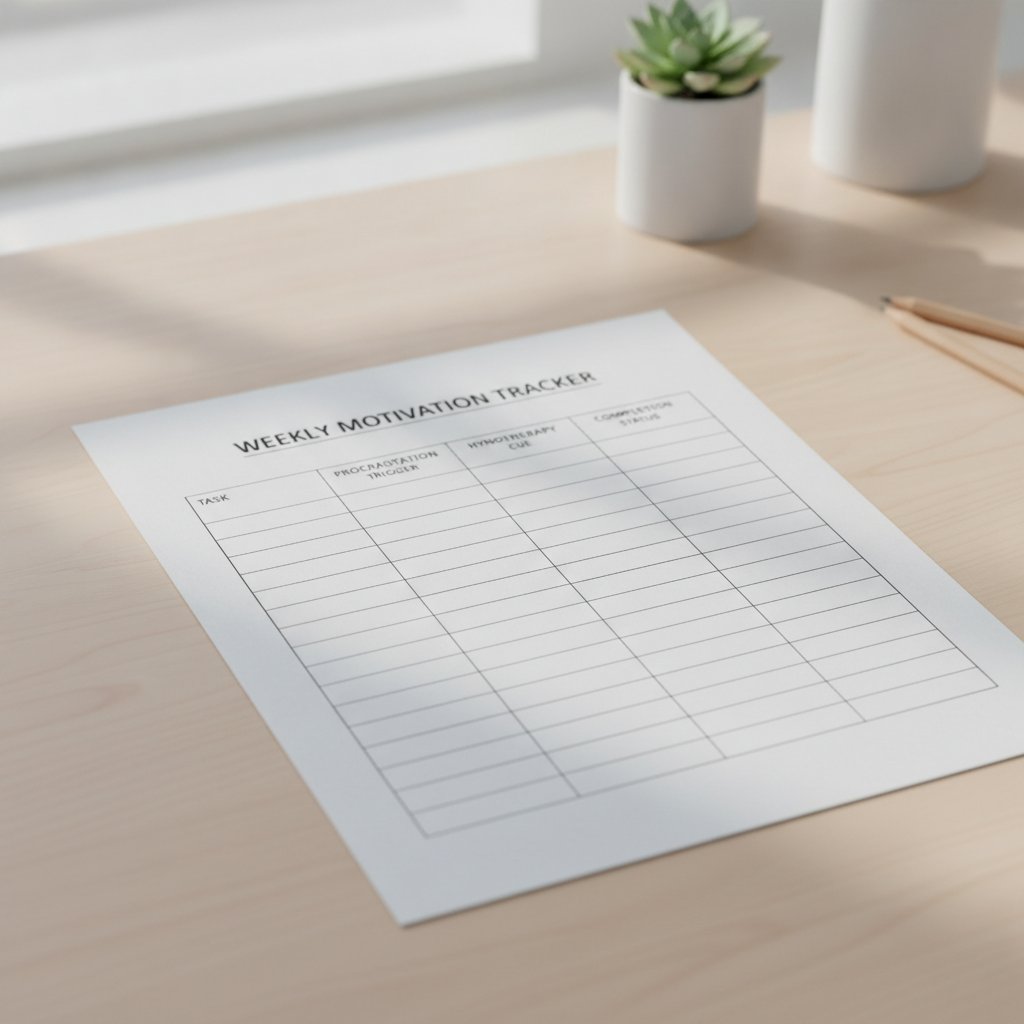
Your subconscious runs on pattern recognition and survival. If presenting a previous proposal brought intense anxiety, public embarrassment, or exhaustion, your brain tags similar projects as hazards. It shields you from that discomfort by steering your attention toward safe, low-risk chores.
Organizing a desk drawer feels productive, so your brain uses it as an escape valve. You get a fast dopamine hit from crossing off an easy item while avoiding the vulnerability of the main deliverable. A clinical NIH study on hypnosis as a tool for behavior change details how focused trance bypasses conscious critical interference, opening the door to update conditioned stress reflexes.
During clinical trance, your nervous system steps down from sympathetic fight-or-flight into a settled parasympathetic baseline. You can isolate the exact friction point—fear of criticism, fear of the obligations success brings, or simple conflict avoidance—and dissolve the physical charge around it.
Can Hypnosis for Productivity Stop Chronic Avoidance?
Hypnosis for Productivity breaks avoidance cycles by untangling the actual work from the subconscious dread of judgment or burnout. Instead of forcing yourself forward through tension, Hypnotherapy trains your nervous system to stay steady and grounded while tackling demanding goals.
By pairing challenging tasks with physiological safety instead of perceived threat, Hypnotherapy turns initiation into a natural reflex rather than an uphill fight.
When you sit down to write, design, or pitch, your brain no longer treats the blank page as a trap. Sessions build post-hypnotic triggers that link the start of a task to mental clarity and composure. With each visit, sitting down to work becomes your default response.
Willpower Tactics vs. Hypnotherapy Habit Change
| Mechanism | Willpower & Calendar Apps | Hypnotherapy Habit Change |
|---|---|---|
| Primary Target | Conscious discipline and rigid scheduling | Subconscious emotional associations and triggers |
| Energy Demand | High; drains mental energy throughout the day | Zero; rewires automatic reflexes |
| Handling Stress | Breaks down when fatigue sets in | Stabilizes baseline somatic calmness |
| Long-Term Retention | Fragile; requires constant tracking | Durable; becomes an effortless natural habit |
How Does Hypnotherapy Retrain Limiting Beliefs Around Work?
Hypnotherapy resets limiting beliefs by guiding you into an altered, deeply receptive state where you inspect and update old narratives built during previous bouts of stress. Chronic avoidance usually feeds on unspoken rules: “If it isn’t perfect, I’ve failed,” or “Working hard always leads straight to exhaustion.”
These beliefs run silently during the workday. You don’t consciously debate them; your body simply freezes or tires out the moment you open a spreadsheet. You can explore our Hypnotherapy services to see how clinical trance works through performance anxiety, dread of failure, and chronic exhaustion.
Hypnotherapy replaces internal self-criticism with direct somatic anchors that link deep focus to biological ease. During trance, we guide you through finishing key milestones without the accompanying chest tightness or panic. Your nervous system discovers that finishing work is safe, quiet, and satisfying.
The Subconscious Trigger and Action Protocol

To begin reshaping avoidance patterns before your first session, run this four-step diagnostic protocol. It catches your automatic hesitation points in real time and sets initial somatic anchors.
- Catch the Micro-Hesitation: The second you turn away from your core priority, pause. Stop yourself from self-critique. Map the physical sensation in your body, whether that means a tight chest, quickened breathing, or a dropped sensation in your gut.
- Record the Hidden Narrative: Jot down the immediate thought that brought on that physical tension. You’ll usually spot scripts like: “This will take four hours,” “I don’t know the exact outcome,” or “What if they hate this draft?”
- Set an Autonomic Reset Anchor: Take three deep diaphragmatic breaths—four seconds in, seven seconds out. As you release the breath, touch your thumb to your forefinger. Give yourself one clear suggestion: “I am completely safe to begin five minutes of imperfect effort.”
- Track the Threshold to Action: Time how many minutes pass between your initial hesitation and your return to the task. Consistent repetition pulls this delay from hours down to seconds.
Running this protocol daily uncovers the exact emotional cues that trigger avoidance so we can defuse them in trance. Bring your notes to your session; they give us the precise targets to resolve.
A Real Practice Snapshot: From Paralyzed to Consistent
A corporate consultant came to our clinic after months of project paralysis. She repeatedly pushed high-stakes client reviews into late-night marathons. Her daylight hours dissolved into social media loops, desk tidying, and quiet panic, costing her hours of restorative sleep and leaving her burned out.
Instead of troubleshooting her project software, we focused directly on her physiological alarm state. In hypnosis, we traced her panic to a perfectionist childhood dynamic where simple mistakes drew sharp criticism. Her subconscious mind treated every client review as an emotional trap.
Over four targeted sessions, we decoupled professional performance from personal survival. We anchored a physical cue—pressing her ring finger against her thumb—to feelings of grounded competence. Within three weeks, she began clearing client decks in calm two-hour morning blocks, without the midnight panic.
Frequently Asked Questions
Does hypnosis for Productivity actually work long term?
Yes. Hypnotherapy builds durable work habits by updating the autonomic associations behind chronic avoidance. When your subconscious mind stops treating complex tasks as personal threats, consistent follow-through feels natural rather than forced.
How many sessions are typically required to Beat Procrastination?
Most clients see clear progress within three to six sessions. The timeline depends on whether your avoidance comes from situational task friction or deeper patterns of chronic perfectionism and imposter anxiety.
What does being hypnotized feel like during a session?
Hypnosis feels like deep physical ease combined with crisp, calm concentration. You stay in control, aware of your surroundings, and able to talk throughout the session. The experience resembles the grounded clarity you feel just before drifting off to sleep or when absorbed in a good book.
Can Hypnotherapy fix deep perfectionism and fear of failure?
Yes. Hypnotherapy cuts through perfectionism directly. Trance work helps you break old neurological associations between personal self-worth and flawless output, giving you the freedom to produce solid, imperfect work without second-guessing yourself.
Reclaim Your Focus and Momentum Today
Chronic delay is an emotional signal, not a character flaw. You don’t need another color-coded calendar, rigid phone locks, or late-night guilt. You only need to align your subconscious drive for safety with the goals you actually care about.
Book your free 30‑minute consultation today. Let’s clear the internal resistance, restore your attention, and build steady progress that lasts.